Giving Back to the City the Efforts Vigorously Carried and Meticulously Sustained.
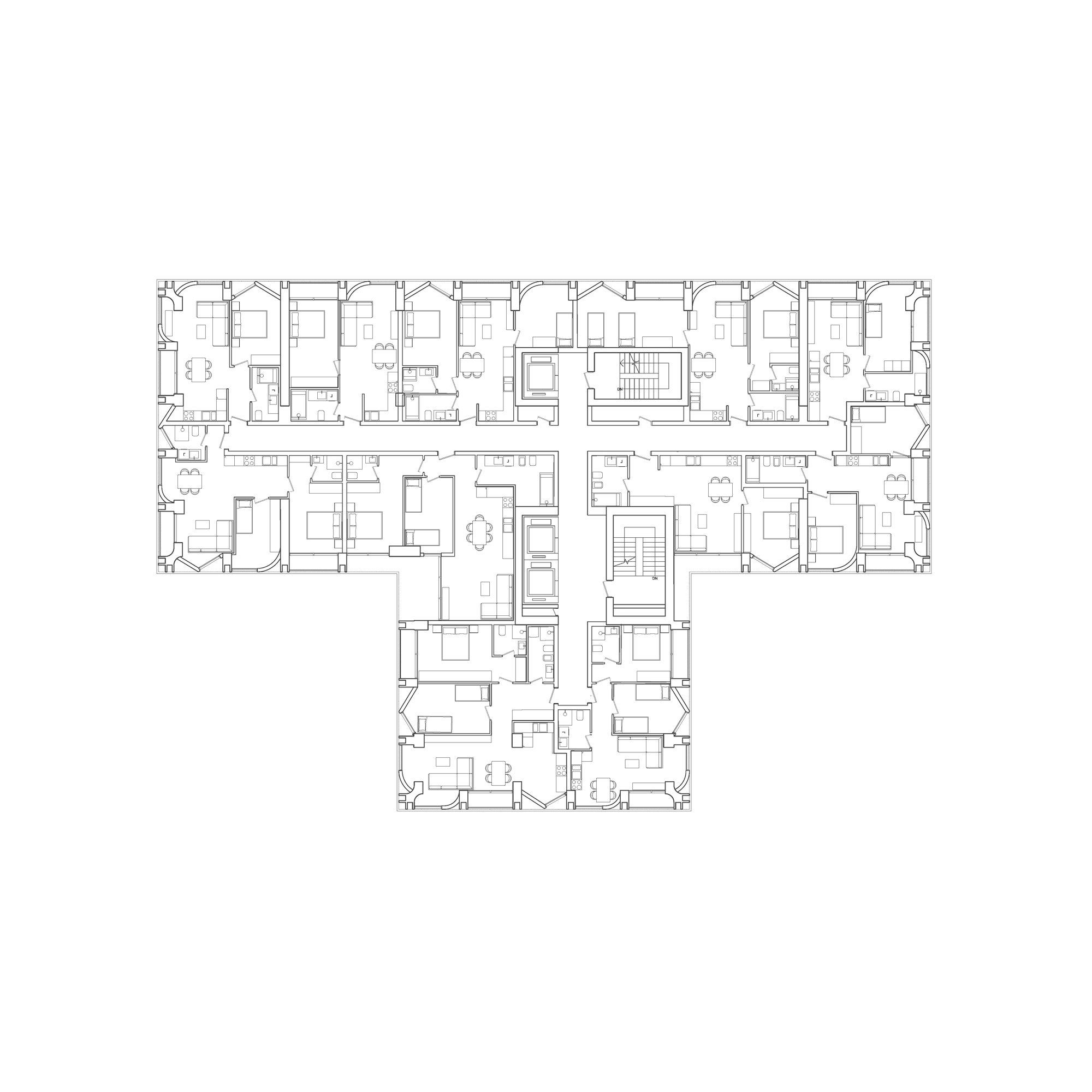
This project begins with a given stock of programmatic requirements, yet seeks to quietly escape their strict obedience, opening a wider realm for imagination. An imagination that, at its core, gravitates toward the most elementary forms: those that have shaped Euclidean geometry and our understanding of space: the circle, the square, and the triangle.
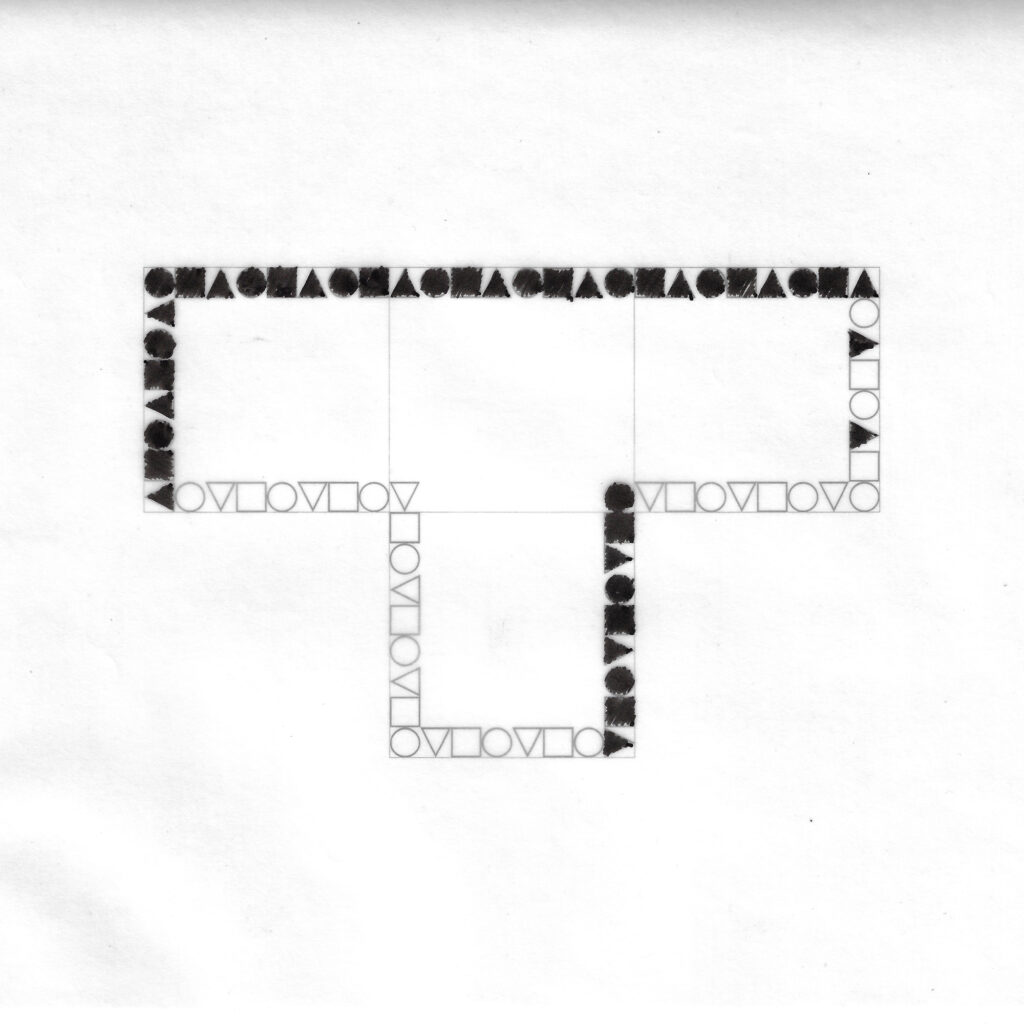
The project explores the enduring love–hate relationship between these primordial figures, a relationship that has never fully satisfied aesthetic desire, yet has consistently generated the possibility of occupation through the residual spaces left between them. It is precisely within these interstitial conditions that architecture finds some of its most unexpected opportunities.
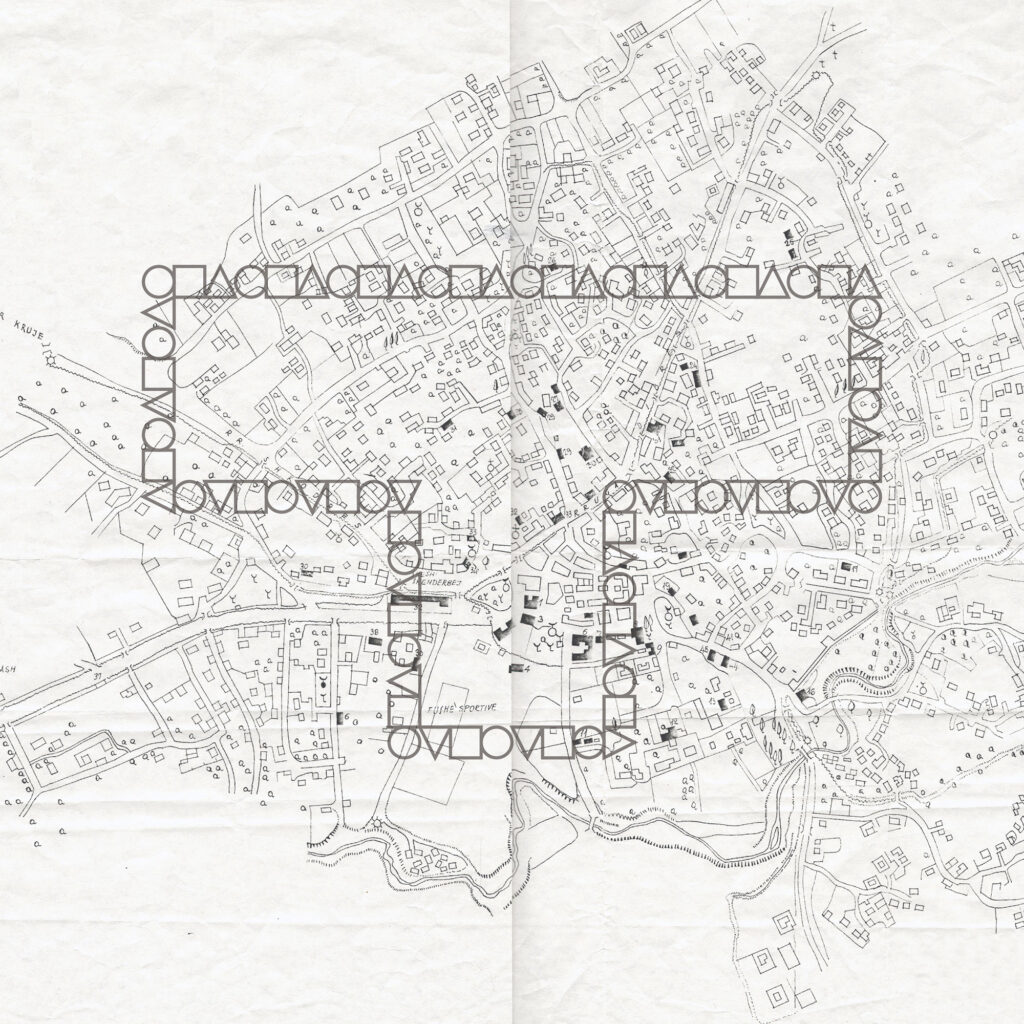
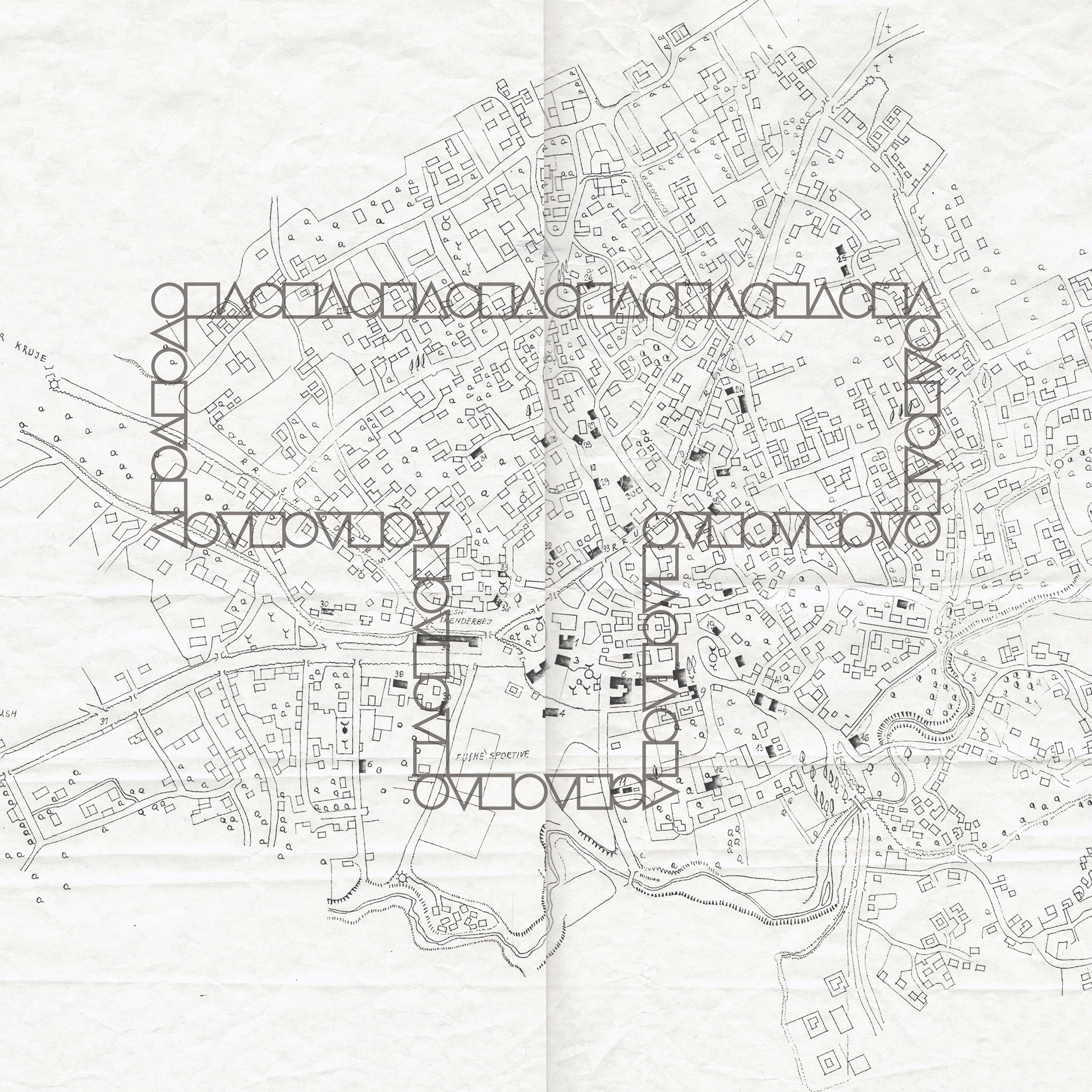
Concept. Collage on Tirana large scale old map – 1917.
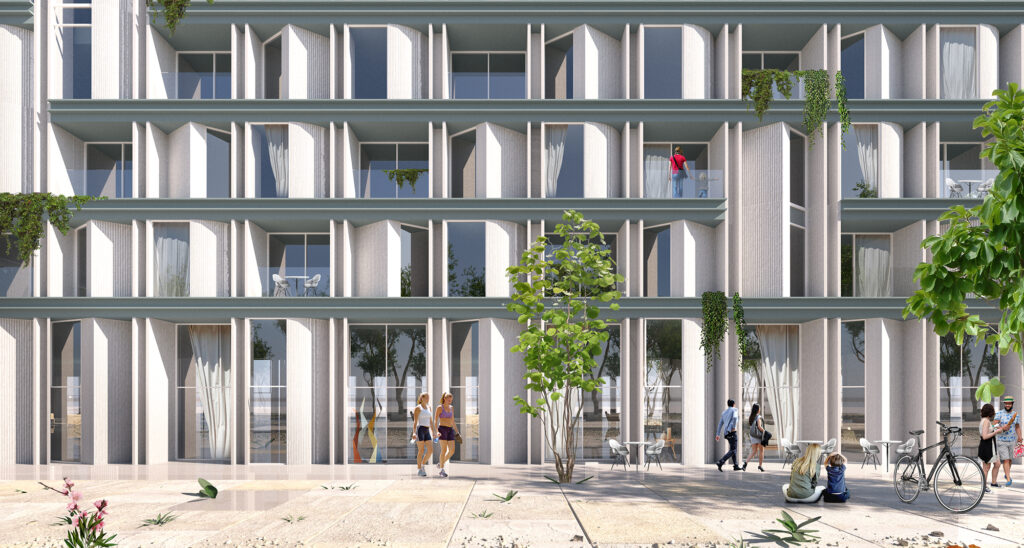
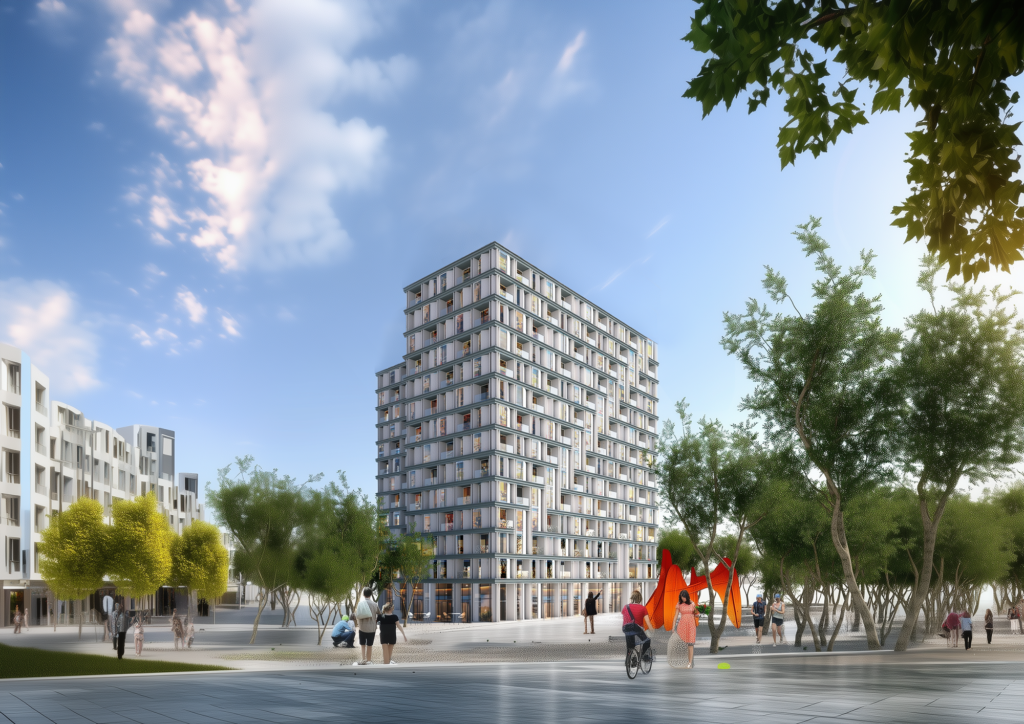
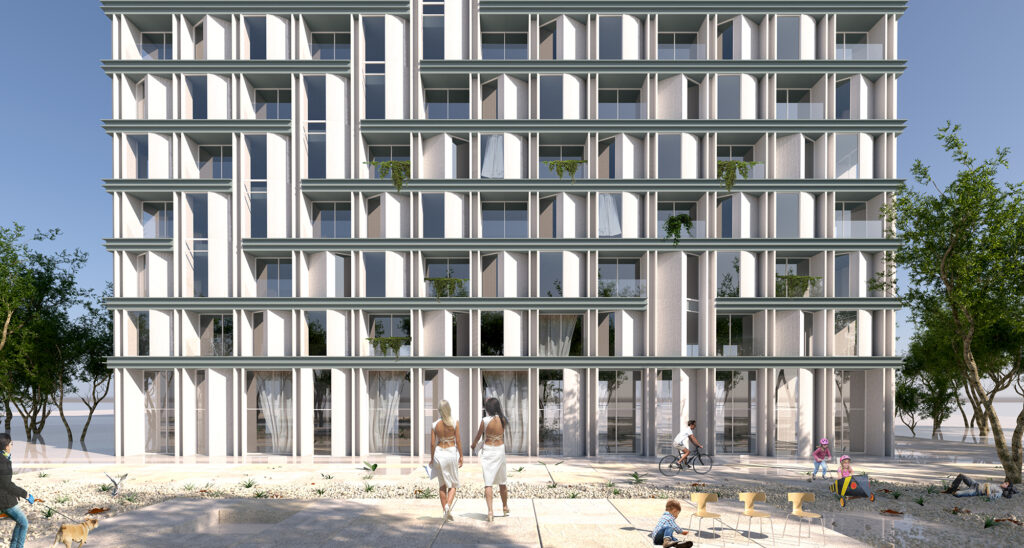
Carefully orchestrated across the façade, the three shapes challenge the conventional illusion of depth by producing real spatial conditions; spaces that are not merely perceived, but inhabited. In doing so, the façade ceases to be a flat surface and becomes a field of negotiation between geometry, perception, and use.
| LOCATION | Tirana, Albania |
| YEAR | 2026 |
| CLIENT | Confidential |
| STATUS | Under Construction |
| PROGRAM | Vertical Mixed-Use |
| PROJECT ARCHITECT | Enxhi Ismailaja, Rael Xhelilaj, Julian Beqiri |
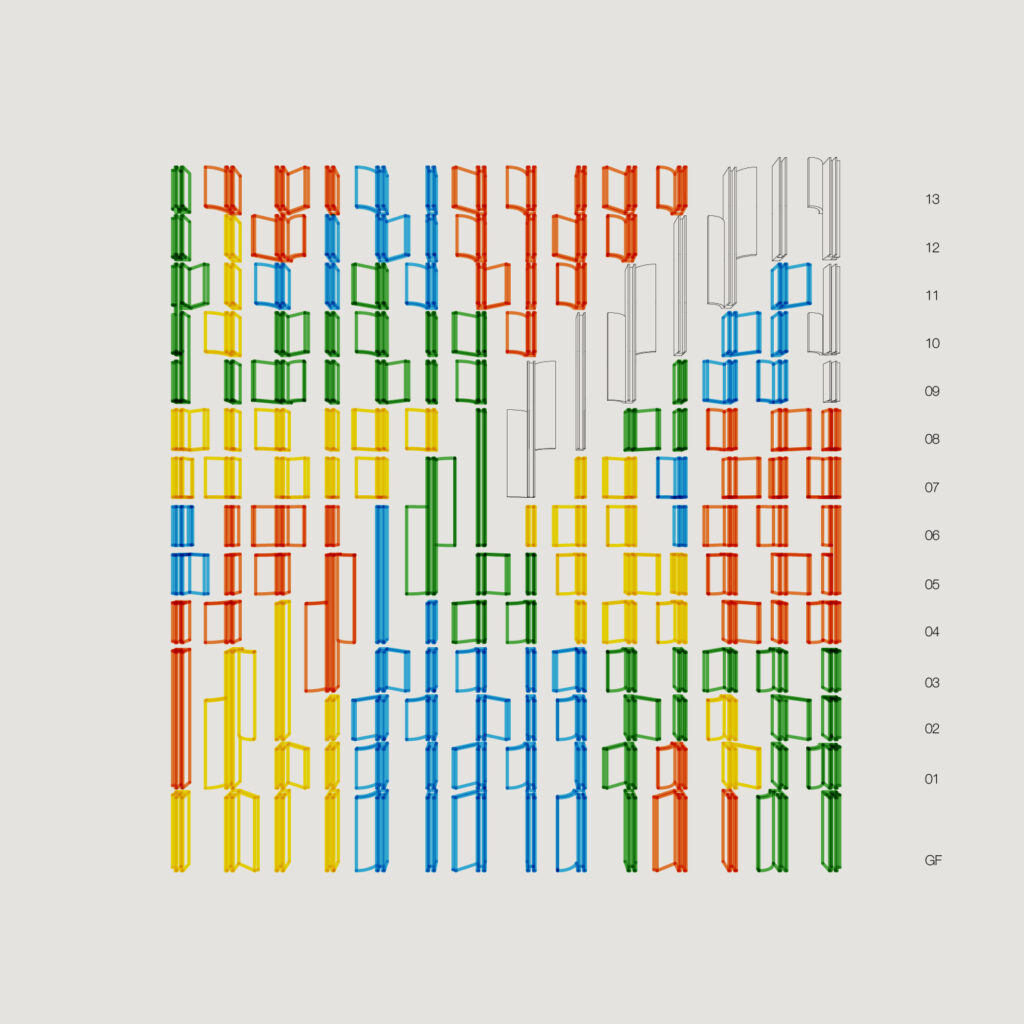
Facade Study. Reference ‘matrix multiplications’, Frieder Nake, 1967 | Tate.
In an age of incessant transitions, haunted by the specter of its own becoming; in an age of waning identities, where ideas once imagined linger in the uneasy space between conception and expression; in an age where theory collapses beneath the weight of its own progeny; in an age of digital abundance, swollen with information yet starved of meaning; in an age where the singular voice increasingly claims to embody the desires of the collective: it becomes necessary to listen anew.
To listen to the formless murmur of walls and the shapeless resonance of roofs; to the silent persistence of streets, courtyards, and thresholds; to those fragments of memory sedimented within stone, concrete, and earth. For the city speaks in a language older than words and more enduring than doctrine. It whispers through surfaces weathered by time, through voids shaped by absence, through traces left by lives long departed and futures not yet imagined.
Only by attending to these quiet utterances may we begin to grasp what the city has offered, what it has withheld, and what it has patiently awaited in return. For every city is, in the end, an unfinished conversation between those who inherit it and those who dare to imagine it otherwise.